Images: First buildings at massive Rowen project revealed
Originally published in Urbanize Atlanta
Rowen Convergence Center to rise near multifamily facet at 2,000-acre Gwinnett community
How the first new buildings at the education-focused Rowen megaproject could look and function is coming into clearer focus.
The Rowen Foundation today revealed plans for the 2,000-acre community’s Rowen Convergence Center, planned as the first vertical development on site, during a Midtown summit at Woodruff Arts Center.
The center, described as a “landmark” 10,000-square-foot facility, will serve as a hub for interdisciplinary research and collaboration—and an anchor for Gwinnett County’s Rowen overall. A social “backyard” component will also be included.
Rowen leadership expects to break ground on the center in the middle of next year.
The complex will provide “state-of-the-art spaces for research, performance, exhibitions, and convenings—a physical anchor for the partnerships and innovations sparked each year at the [Rowen Convergence Summit] and through Rowen’s Living Lab partnerships with many of Georgia’s higher education institutions and other organizations,” per an announcement today.
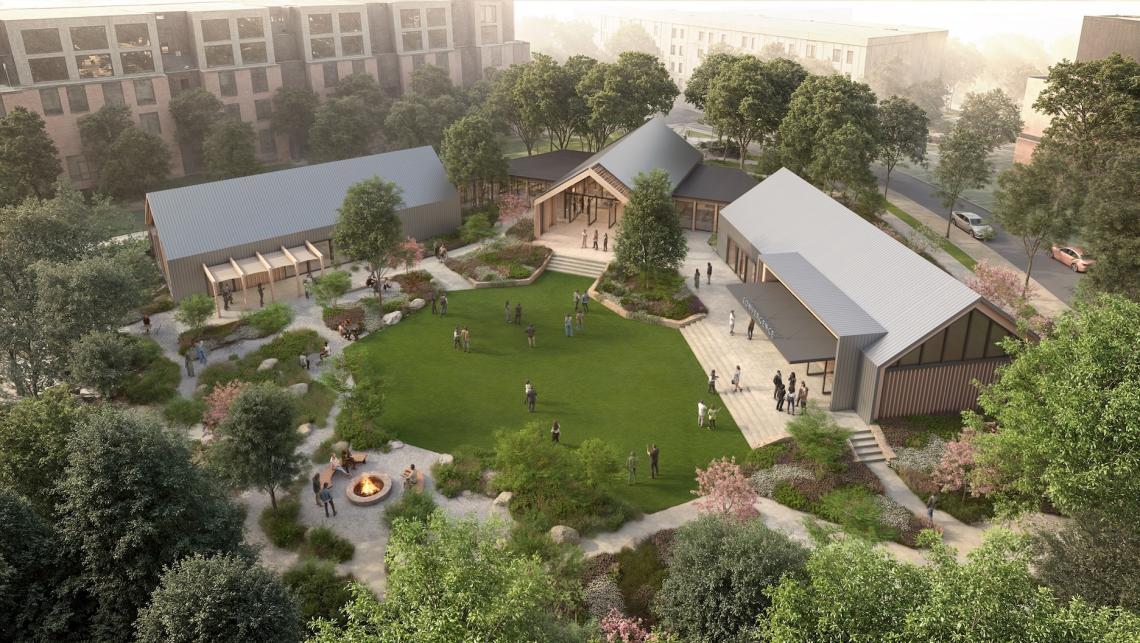 Overview of plans for the 10,000-square-foot Rowen Convergence Center.Courtesy of Rowen Foundation
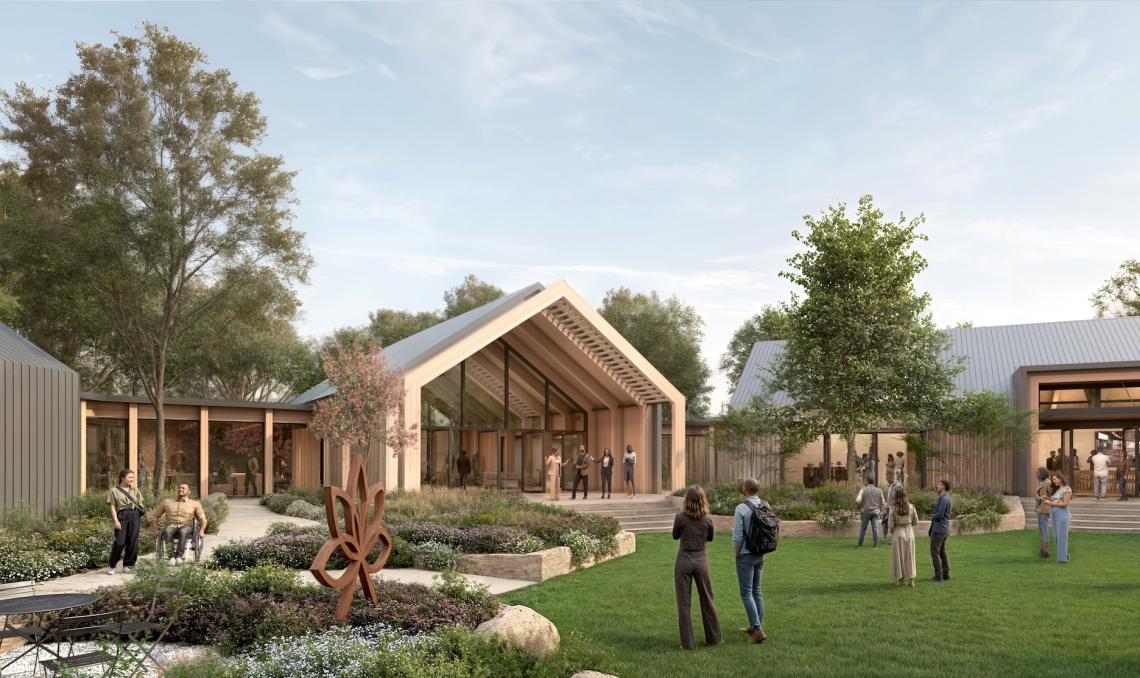 The Rowen Convergence Center’s north entry.Courtesy of Rowen Foundation
The project was revealed today to an audience of more than 200 artists, educators, scientists, and business leaders for the third annual summit. This year’s theme: “The Science of Art in Discovery, Research & Innovation.”
In other Rowen development news, project leaders earlier this month issued a Request for Proposals for the initial, multifamily residential phase in what’s called Rowen Village, a mixed-use commercial node. Responses are due by Dec. 8.
Exactly how much residential development is planned at the outset wasn’t specified, but the chosen developer will be expected to obtain county approvals, plan, finance, build, maintain, and operate the Rowen project, per its leadership.
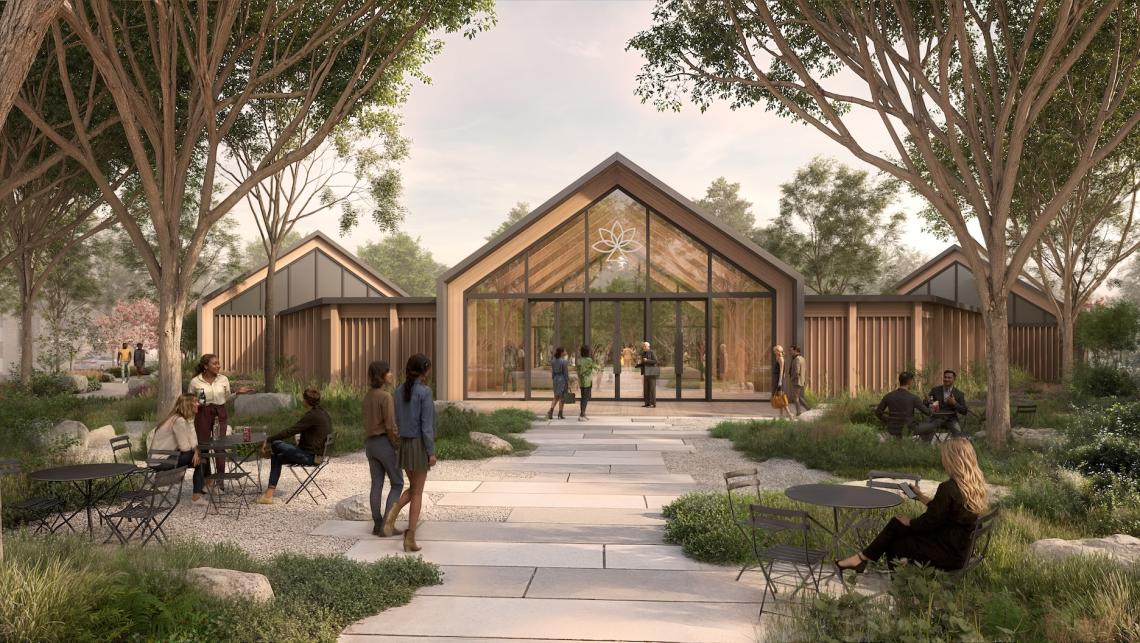 South entry at Rowen Convergence Center.Courtesy of Rowen Foundation
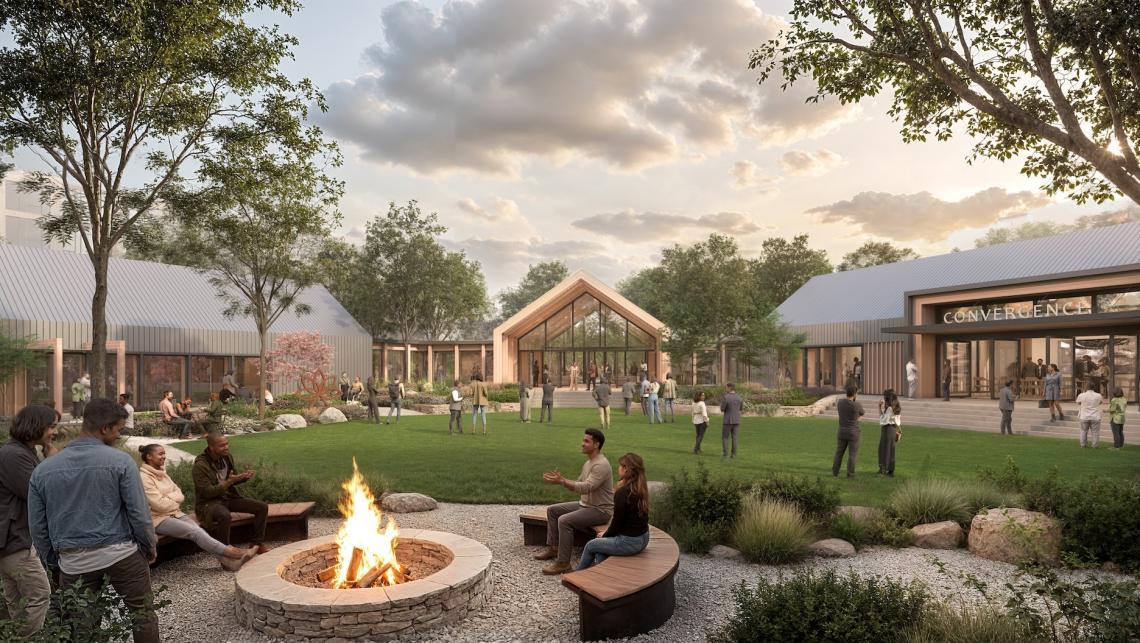 Plans for the “backyard” at Rowen Convergence Center.Courtesy of Rowen Foundation
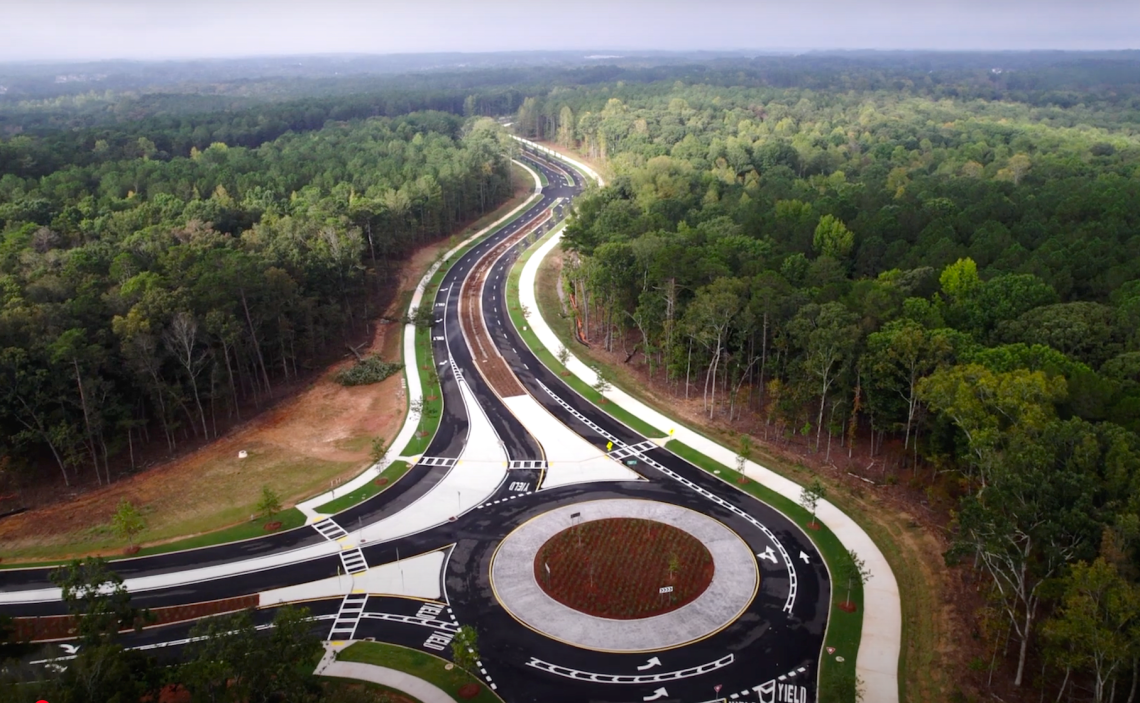
Earlier this year, Rowen completed a $32-million infrastructure project described by officials as “complete streets” across its former woodlands between Atlanta and Athens.
Considered phase one of Rowen’s buildout, the two miles of finished roadway, greenspaces, and seven miles of multi-use pathways make the first 800 acres of the property accessible to the public, while putting infrastructure in place for development.
All utilities including power, water, sewer, fiber, and natural gas are in place for the section in question as well. The infrastructure is designed to withstand the impacts of climate change—think: biofiltration methods instead of traditional curb-and-gutter systems, narrower traffic lanes to cut back on concrete usage and heat-island effects, and other measures—while prioritizing people-friendly over cars-centric layouts, officials previously told Urbanize Atlanta.
Rowen broke ground with much fanfare in December 2022. Situated 35 miles from Atlanta along Ga. Highway 316, Rowen’s site is capable of supporting 22 million square feet of development overall, equivalent to almost 17 Bank of America Plaza towers, Atlanta’s tallest building, per project leaders.
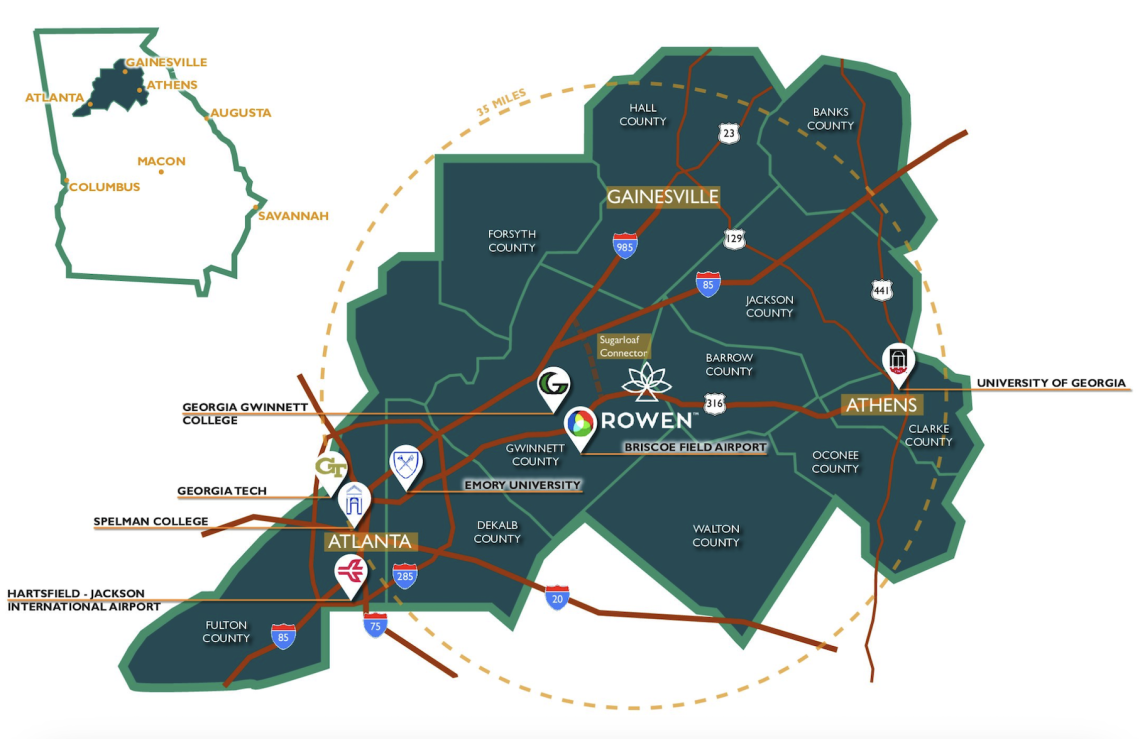 Overview of the “Rowen Region,” which project backers call “one of America’s most vibrant and multicultural communities.”Rowen Foundation
 Rowen Foundation/YouTube
An economic analysis published earlier this year identified the 11-county region surrounding Rowen—what’s being coined the “Rowen Region”—as Georgia’s next hotspot for sheer growth and higher-education advancements. The project’s atypical name alludes to “a second harvest.”
Ultimately, Rowen is envisioned as a mix of lab, office, and civic spaces, alongside a mix of multifamily buildings, cafes, start-up hubs, parks, and public trails. Project heads have said the “gamechanger” concept will likely be a multi-decade buildout—up to 40 or 50 years, given the scope—but could come quicker, depending on market demand.
The Rowen Foundation says the project could ultimately produce 100,000 jobs across Georgia and contribute between $8 and $10 billion annually to the state’s economy.
Rowen’s board of directors, which governs the Rowen Foundation, is made up of leaders from the University of Georgia, Georgia Tech, Emory University, Georgia Gwinnett College, and others who are advancing the project for its economic and jobs-creation potential.
Find more Rowen context and imagery in the gallery above.
 Media Coverage
Georgia invests $1B to turn Route 316 into ‘workforce expressway’ between Atlanta and Athens
Originally posted in Atlanta Business Chronicle. A decade from now, a series of stop-and-start intersections along the state highway connecting Atlanta to Athens will be ditched in an effort to improve traffic flow and accommodate growth. Georgia’s Department of Transportation is investing approximately $1 billion into a long-term overhaul of state Route 316. The four-lane […]
 Announcements
Rowen Foundation Announces Leadership Transition
The Rowen Foundation today announced that President and CEO Mason Ailstock will step down after accepting a new opportunity. The Rowen Board of Directors is conducting a national search for Rowen's next president and CEO with the Board anticipating new leadership later this fall.
Blog
Why Companies Are Choosing Georgia’s Largest Biotech Park
While Boston and San Francisco have long dominated the life sciences conversation, the Southeast is writing a new chapter, and Georgia is leading it. With 2,000 acres of preserved land for state-of-the-art facilities, labs, and collaboration spaces, Rowen is a compelling destination for biopharma and biotech industry investments that value collaborative learning, knowledge sharing, and transformative thinking.